
On this page
Maids Hands For You can help you find that person. You take a subscription, read through nurse and carer profiles in your district, and speak to them yourself. Ask directly whether she has done palliative work before, because it takes a particular temperament and the honest ones will tell you.
We are a staffing platform, not a medical service. The clinical care comes from your palliative team. What we help with is the person in the house for the hours nobody else can cover.
What palliative care means at home
Palliative care is about comfort rather than cure. When treatment can no longer change the course of an illness, the focus moves to controlling pain and other symptoms so the person is as comfortable as possible, and to supporting the family through it.
It isn't only for the last days. Many people receive palliative care for months alongside ongoing treatment, particularly with cancer, advanced organ disease and progressive neurological conditions. The palliative doctor decides when it starts, in consultation with the treating specialist and the family.
At home, this usually involves a palliative team visiting periodically, and someone providing the day-to-day care in between.
Use Kerala's palliative network
Worth saying clearly, even though it isn't a service we sell.
Kerala has the most developed community palliative care system in India. Community-based palliative units, volunteer networks and hospital-linked palliative departments operate across the state, and in many places home visits by a palliative doctor and nurse are available at little or no cost to the family.
If you're facing this, contact your local palliative unit or ask the treating hospital to refer you. They handle pain management, symptom control and the clinical decisions, and they do it better than any private arrangement because it's what they specialise in.
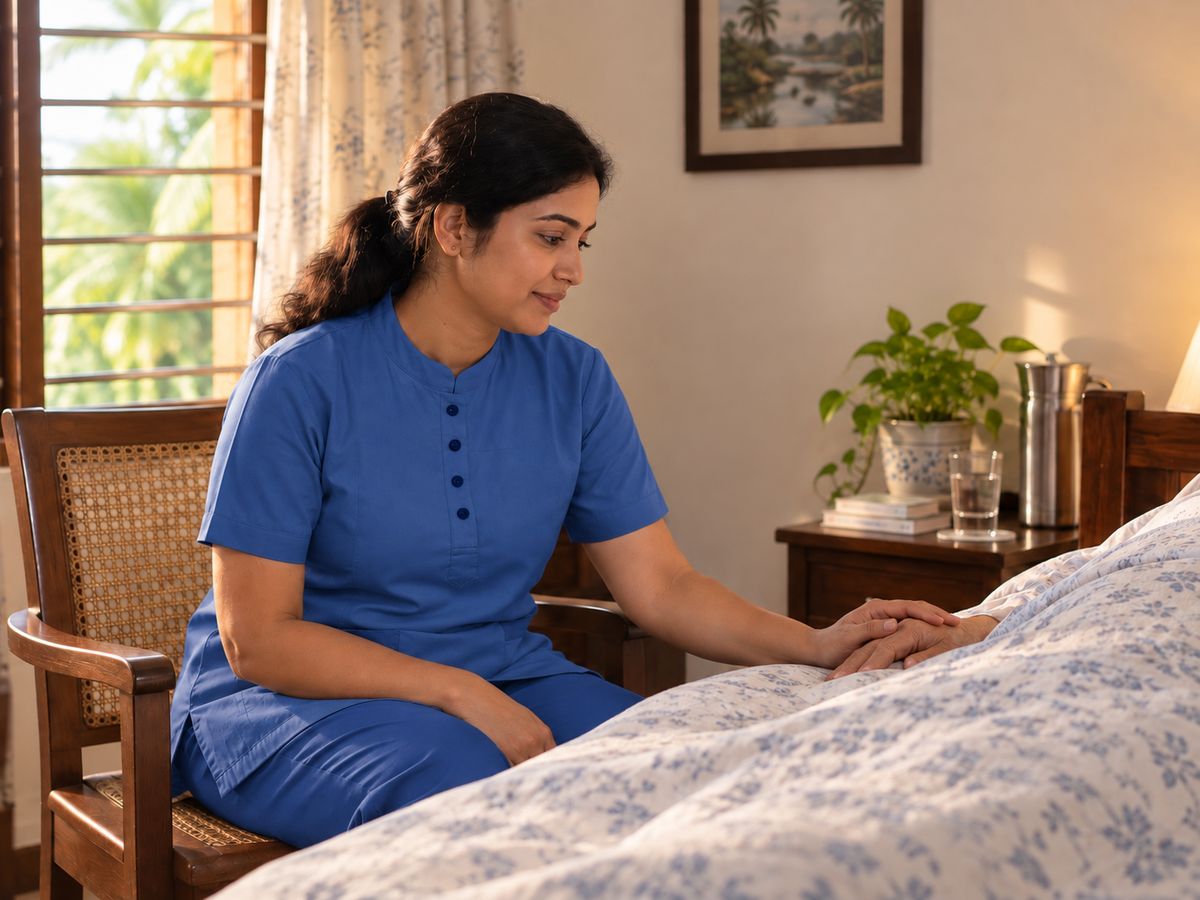
What those teams cannot do is stay in the house. They visit. The hours in between, through the night, day after day, are where families run out of capacity. That's the gap a home carer or nurse fills, and that's what we help with.

Nurse or carer
A qualified nurse is needed where there's pain medication to administer, a catheter or feeding tube, wounds or pressure sores, injections, or oxygen at home. She works entirely to the palliative doctor's instructions.
A trained carer manages personal care, feeding, turning, keeping the person clean and comfortable, and being present. For many families this is what's actually needed, with the palliative team handling the clinical side on their visits.
Ask about palliative experience specifically. It's different work. Someone who has done it before will handle the last weeks differently to someone who hasn't, and she'll also be steadier with the family.
What the day-to-day care involves
- Repositioning regularly to keep the person comfortable and prevent pressure sores
- Personal hygiene, sponge bathing, keeping the bed clean and dry
- Helping with feeding, or managing tube feeds where a nurse is engaged
- Giving prescribed pain and symptom medication on schedule, nurse only
- Mouth care, which matters a great deal for comfort
- Watching for changes in pain, breathing or distress, and telling the palliative team
- Being present so the person isn't alone, and so the family can rest
Every clinical decision stays with the palliative doctor. Home staff follow that plan, they don't set it.

What it costs
The subscription is what you pay us for access to the profiles.
Her salary is paid directly to her:
| Arrangement | Trained carer | Qualified nurse |
|---|---|---|
| Day duty | ₹15,000 to ₹20,000 / month | ₹20,000 to ₹28,000 / month |
| Night duty | ₹18,000 to ₹22,000 / month | ₹22,000 to ₹30,000 / month |
| Live-in | ₹20,000 to ₹28,000 / month | ₹28,000 to ₹38,000 / month |
Many families run night cover only, with relatives managing the day between them. It's less expensive and it's often the arrangement that actually keeps everyone standing.
Where we cover
- Kochi
- Trivandrum
- Calicut
- Thrissur
- Kottayam
- Kollam
- Alappuzha
- Palakkad
- Malappuram
- Kannur
- Wayanad
- Kasaragod
- Idukki
- Pathanamthitta
- Bangalore
Related: bedridden patient care, night care, home nursing.
Frequently asked questions
What is palliative care at home?
Care focused on comfort rather than cure, given where the person lives. A palliative team manages pain and symptoms, and day-to-day care is provided at home by family, a carer or a nurse.
Is palliative care free in Kerala?
In many places, yes. Kerala has an extensive community palliative network and hospital-linked palliative units, and home visits by a palliative doctor and nurse are often available at little or no cost. Ask the treating hospital for a referral to your local unit. Paid home staff is a separate thing, covering the hours between those visits.
What's the difference between palliative care and home nursing?
Palliative care is a clinical approach directed by a palliative doctor. Home nursing is the staffing that carries out day-to-day care. Most families facing a terminal illness need both, from different sources.
How much does home palliative support cost?
Around ₹20,000 to ₹28,000 a month for a live-in trained carer and ₹28,000 to ₹38,000 for a qualified nurse, paid directly to her. Many families arrange night cover only.
Can a cancer patient be cared for at home?
Frequently, yes, with the palliative team managing pain and symptoms and a carer or nurse providing daily care. Whether it remains appropriate is a decision for the palliative doctor as things change.
Who decides when palliative care starts?
The treating doctor and palliative specialist, with the family. It often begins earlier than people assume and can run alongside ongoing treatment.


